


TICKET INFO
| DATE&TIME | VENUE | ADD TO CALENDAR | |||
| {{item.tarih}} | {{item.mekan}} |
|
TICKETS | TICKETS | FREE ADMISSION |

( *) The crew/cast will attend.
( °) This screening will begin later than announced due to the duration of the previous film.
Special Screening: Turkish Classics Revisited
HOW TO SAVE ASIYE
ASİYE NASIL KURTULUR
- Director: Atıf Yılmaz
- TURKEY / 1986 / DCP / Colour / 106’ / Turkish; English s.t.
- Screenplay: Barış Pirhasan
- Original Work: Vasıf Öngören
- Director of Photography: Kenan Davutoğlu
- Editing: Mevlüt Koçak
- Music: Sarper Özsan
- Cast: Müjde Ar, Ali Poyrazoğlu, Hümeyra, Nuran Oktar, Güler Ökten, Füsun Demirel, Yaman Okay, Yavuzer Çetinkaya, Fatoş Sezer, Defne Halman, Dursun Ali Sarıoğlu, Savaş Yurttaş, Taner Barlas
- Producer: Cengiz Ergun
- Production Co.: Odak Film
- World Sales: Odak Film
Istanbul Film Festival continues to revive the most significant works of Turkish cinema by restoring these outstanding classics with the collaboration of Zurich Sigorta. Filmlovers will have the opportunity to watch the 1987 film How to Save Asiye from its copy digitally restored by Atlas Prodüksiyon.
1987 Antalya Best Supporting Actress (Hümeyra)
Narration within narration, layer within layer, play within play... Asiye Nasıl Kurtulur / How to Save Asiye by Atıf Yılmaz is one of the most daring ventures in our cinematographic history. It is impossible not to notice a Brechtian aesthetic in this adaptation of the eponymous stage play written by Berlin-educated Vasıf Öngören displaying influences of Epic Theatre. Musical scenes, choral sequences winking at the viewer, numerous parts which tear the plot and invite the viewer to take part in the story... Adapted to cinematographic grammar by Barış Pirhasan, the text is also an exercise on what can be done in cinema along the lines of Epic Theatre’s narration styles. How can the viewer follow a story through the analysis of the mechanisms that corner characters into the dead end they’re in, rather than traditional empathy and emotional catharsis? What could be cinema’s response to Brechtian aesthetics? Atıf Yılmaz’s film is all the more precious as it does not content itself with addressing these questions, but rather draws the viewers into its extraordinarily playful structure, and rewards them with true cinematographic delectation.
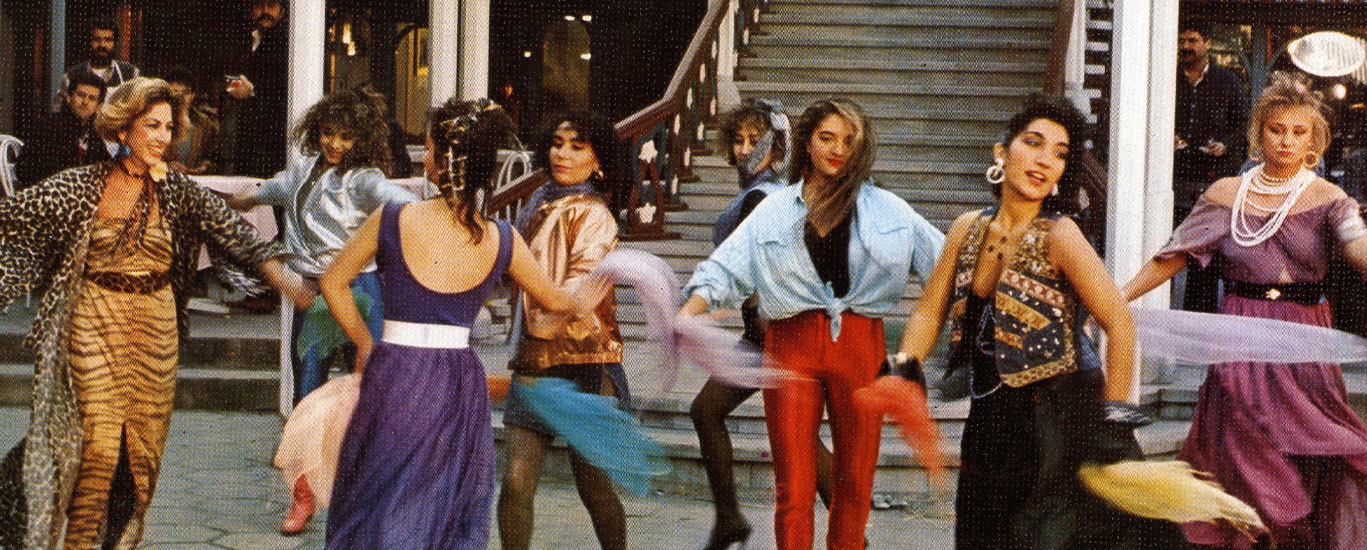
Contrarily to Nejat Saydam’s 1974 adaptation, the women in the brothel in Atıf Yılmaz’s film are far from being depicted as victims. Right from the opening, the film makes it clear that it won’t turn these women into just another melodramatic element. Atıf Yılmaz’s film won’t romanticize working in a brothel, being a sex worker, or “falling victim”, instead, it reflects these women’s daily life rampage in a cheerful celebration, evoking our musical stage tradition. Thanks to this buoyancy, the taste the film leaves in the mouth is nothing like a moralistic melodrama.
The story we are being told is essentially that of Asiye, the daughter of a sex worker as well, who eventually has no choice but to follow in her mother’s footsteps after all other ways run dry. The powerful cast has a lot to do with the success of the rendition of this familiar plot in a Brechtian aesthetic rather than the typically melodramatic tone of Yeşilçam productions. Müjde Ar and Hümeyra enact the different paths Asiye could have followed in the narration within a narration, or “play within film” sequences. One of the film’s most important layers is precisely this “stratum of representation.” Thanks to this representation, enacted by the women in the brothel, a bourgeois lady from the Society against Prostitution, pure product of her class, gets a grasp of why women like Asiye are always trapped in the same mangle.
Eventually, How to Save Asiye does not content itself with identifying the mechanisms that create the women working in brothels, but also addresses the very system which gives way to the formation of these cogwheels. Actors such as Müjde Ar, Hümeyra and Ali Poyrazoğlu give life to more than just one persona along the tracks of the film’s narration layers and wittily convey the nuances of the film’s anti-system tone in the process. However reminiscent of the theatre this brilliantly staged film might be, it achieves its proper aesthetics by means of a purely cinematographic grammar and breaks the fourth wall in an invitation for the spectator to delve in critical thinking.
- Abbas Bozkurt
 This film was a Meetings on the Bridge participant.